一般过去时 Simple Past
考试:📘 KET ✓ 📙 PET ✓ 📕 FCE·雅思 ✓ 分类:时态 考试入口:KET语法清单 关联:一般现在时 Simple Present | 过去进行时 Past Continuous | 现在完成时 Present Perfect(易混淆⚠️)
核心规则(Grammar Core)
什么时候用?
过去某个时间发生的动作或状态,已经结束了:
- 过去的事件 — Columbus discovered America in 1492.
- 过去的习惯 — When I was young, I played in this garden every day.
- 故事叙述 — The door opened. A tall man walked in. He looked around and sat down.
构成公式
| 句型 | 公式 | 例句 |
|---|---|---|
| 肯定(规则) | S + V-ed | She visited Paris last summer. |
| 肯定(不规则) | S + V不规则过去式 | He went to London yesterday. |
| 否定 | S + did not + V原形 | I didn’t see the movie. |
| She didn’t finish her homework. | ||
| 疑问 | Did + S + V原形? | Did you enjoy the party? |
| Did he arrive on time? |
规则动词 -ed 发音(KET 听力暗考)
| 发音 | 条件 | 例子 |
|---|---|---|
| /t/ | 清辅音结尾(k, p, s, f, sh, ch) | walked, stopped, watched, washed |
| /d/ | 浊辅音或元音结尾 | played, opened, lived, enjoyed |
| /ɪd/ | t 或 d 结尾 | wanted, needed, started, visited |
听力时,/t/ 和 /d/ 很轻很快,容易听漏。Aaron 听书虫音频时注意这个。
不规则动词 Top 30(按 KET 高频排序)
| 原形 | 过去式 | 中文 | 记忆提示 |
|---|---|---|---|
| go | went | 去 | 完全变形,死记 |
| see | saw | 看见 | saw 也是”锯子” |
| come | came | 来 | a 替换 o |
| take | took | 拿 | oo 替换 a |
| get | got | 得到 | o 替换 e |
| make | made | 做 | 去 k 加 d |
| have | had | 有 | 简单变化 |
| say | said | 说 | 发音 /sed/ |
| give | gave | 给 | a 替换 i |
| think | thought | 想 | ought 家族 |
| tell | told | 告诉 | o 替换 e |
| find | found | 发现 | ound 替换 ind |
| know | knew | 知道 | kn- 保留 |
| write | wrote | 写 | o 替换 i |
| read | read | 读 | 拼写不变,发音变 /red/ |
| eat | ate | 吃 | 发音 /eɪt/ = eight |
| run | ran | 跑 | a 替换 u |
| buy | bought | 买 | ought 家族 |
| bring | brought | 带来 | ought 家族 |
| teach | taught | 教 | aught 家族 |
| sit | sat | 坐 | a 替换 i |
| stand | stood | 站 | ood 替换 and |
| lose | lost | 丢失 | 去 e 加 t |
| pay | paid | 付款 | 去 y 加 id |
| meet | met | 遇见 | 缩短 |
| feel | felt | 感觉 | 缩短 + t |
| leave | left | 离开 | 去 eave 加 eft |
| put | put | 放 | 不变! |
| cut | cut | 切 | 不变! |
| let | let | 让 | 不变! |
-ought/-aught 家族:think→thought, buy→bought, bring→brought, teach→taught, catch→caught——记住这一组就搞定5个。
Grammar Lens
时间轴定位
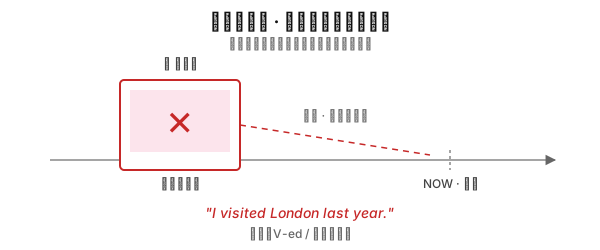
一般过去时像一张旧照片——定格在过去某个时刻,和现在没有直接联系。
对比辨析:一般过去时 vs 现在完成时 ⚠️⚠️⚠️
这是 KET/PET 最最最爱考的一对。Aaron 必须100%搞清。
| 一般过去时 | 现在完成时 |
|---|---|
| 关注过去那个时刻 | 关注对现在的影响 |
| I lost my key yesterday. | I have lost my key.(现在进不了门!) |
| 有明确过去时间 | 没有明确过去时间 |
| When did you arrive? | Have you arrived? |
黄金法则:看到 yesterday / last week / ago / in 2023 → 一定用过去时 看到 already / yet / just / ever / never → 一定用完成时
Culture Note 🇬🇧🇺🇸 英国人和美国人在这里有分歧! 🇬🇧 英式:“I**‘ve just had** lunch.”(用完成时) 🇺🇸 美式:“I just had lunch.”(用过去时) 两种都对,但 KET/PET 是剑桥考试(英国出品),偏爱完成时。
信号词速查
| 信号词 | 中文 |
|---|---|
| yesterday | 昨天 |
| last week / month / year | 上周/月/年 |
| … ago(two days ago) | ……以前 |
| in 2023 / in March | 在2023年/在三月 |
| when I was young | 当我小时候 |
| just now | 刚才 |
😂 Grammar Joke
不规则动词的痛苦
Student’s diary: Monday: I writed my homework. ❌ Tuesday: I wroted my homework. ❌ Wednesday: I wrotten my homework. ❌ Thursday: I writ my homework. ❌ Friday: I wrote my homework. ✅ Saturday: I copied Jack’s homework.
一个学生用了整整一周才学会 write 的过去式——然后周六直接抄作业了。
语法点:write → wrote → written 是典型的不规则三变。没有捷径,只能像这个学生一样反复试错——但不要学他周六的做法。
🏛 语言文化光点
不规则动词为什么”不规则”?
其实不规则动词才是英语中最古老的动词。go→went, see→saw, eat→ate——这些变化源自古英语甚至更早的日耳曼语系。
规则的 -ed 结尾反而是后来才发明的”偷懒法”。新造的词几乎全用 -ed(googled, texted, blogged),而那些用了一千多年的老词保留了原始的不规则变化。
所以记不规则动词表时换个心态:你正在和维京人说同一种语言。
例题精讲
例1(📘 KET · Reading)
Last weekend, we _____ (go) to the beach and _____ (swim) in the sea.
答案:went, swam。last weekend = 过去时间 → 一般过去时。
例2(📘 KET · Use of English)
— _____ you _____ (watch) the football match last night? — Yes, it _____ (be) really exciting!
答案:Did you watch; was。
例3(📘 KET · 过去时 vs 完成时辨析)
A: Have you ever been to Japan? B: Yes, I _____ there in 2022.
A. have been B. went C. have gone
答案:B。in 2022 = 明确过去时间 → 一般过去时。虽然问句用了完成时,回答里有具体时间就切换到过去时。
例4(📙 PET · Writing Part 1 句型转换)
I last visited my grandparents two months ago. I _____ _____ my grandparents for two months.
答案:haven’t visited。last…ago → haven’t…for 是 PET 经典转换。
例5(📕 FCE · 叙事写作)
The door opened slowly. A cold wind blew in. Holmes stood up, reached for his pipe, and walked to the window. “Watson,” he said quietly, “we have a visitor.”
书虫风格的叙事——连续的过去时动词创造画面感。注意每个动词都是不规则变形。
📖 Real English · 真实阅读
🔵 The Titanic
On April 10, 1912, the RMS Titanic left Southampton, England on its first voyage. The ship carried over 2,200 passengers and crew. Everyone believed it was unsinkable. Four days later, at 11:40 p.m., the ship hit an iceberg in the North Atlantic. Water rushed into the lower decks. The crew sent distress signals, but help came too late. The Titanic sank at 2:20 a.m. on April 15. More than 1,500 people lost their lives that night. It became one of the deadliest disasters in history.
🔵 Steve Jobs and the First iPhone
On January 9, 2007, Steve Jobs walked onto a stage in San Francisco. He wore his famous black turtleneck and jeans. “Today, Apple is going to reinvent the phone,” he said. Then he pulled out a small device — the first iPhone. The audience gasped. Jobs showed them how to scroll through photos with just a finger. He made a phone call, played a song, and opened a map — all on one device. That day changed the world of technology forever.
🔵 The Great Fire of London
In September 1666, a small fire started in a bakery on Pudding Lane in London. The baker tried to put it out, but the fire spread quickly. A strong wind blew the flames from house to house. People ran through the streets. They carried whatever they could. The fire burned for four days and destroyed over 13,000 houses. Amazingly, only six people died. After the fire, London rebuilt itself with stone and brick instead of wood.
📝 中文注释(先读完英文再展开)
泰坦尼克号:1912年泰坦尼克号从南安普顿出发首航,撞冰山后沉没,超过1500人遇难。注意 left/carried/believed/hit/rushed/sent/sank/lost 等不规则和规则过去式混用,全文用过去时叙述已完成的历史事件。
乔布斯与第一部 iPhone:2007年乔布斯在旧金山发布初代 iPhone。walked/wore/said/pulled/showed/made/played/opened/changed 连续的过去时动作串出了产品发布会的画面感。注意 is going to 是乔布斯当时在演讲中说的原话(引语中保留现在时态)。
伦敦大火:1666年伦敦一家面包店起火,大风助燃,四天烧毁13000栋房屋但仅6人死亡。started/tried/spread/blew/ran/carried/burned/destroyed/died/rebuilt——叙述历史事件的标准过去时节奏。spread 和 rebuilt 是过去式与原形相同或不规则变化的典型。
练习题
📘 KET 基础(5题)
- She _____ (buy) a new dress yesterday.
- We _____ (not / go) to school last Monday. It was a holiday.
- _____ he _____ (finish) his homework before dinner?
- The film _____ (start) at 7 p.m. and _____ (end) at 9 p.m.
- I _____ (meet) an old friend at the supermarket this morning.
📙 PET 进阶(3题)
- 句型转换:She started working here in 2020. → She _____ _____ here since 2020.
- 选词填空:When I (1)_____ (arrive) at the station, the train (2)_____ already _____ (leave).
- 用过去时写一段3句话的书虫风格小故事,用至少5个不规则动词。
🔗 节点关系
一般现在时("经常"→"过去":时间轴左移)
    ↓
一般过去时 ──────┬─ 过去进行时(过去某刻正在做)
                 ├─ 现在完成时(易混⚠️⚠️⚠️)
                 └─ 过去完成时(更早的过去 · PET)
双链跳转: 一般现在时 Simple Present | 过去进行时 Past Continuous | 现在完成时 Present Perfect
🔗 高频枢纽词 词枢纽 →
以下词汇属于 K12 词枢纽,在本节点高频出现——点击可查看同义辨析与 Aaron 易错点。