条件句 Conditionals
考试:📘 KET ✓ 📙 PET ✓ 📕 FCE·雅思 ✓ 分类:从句 考试入口:KET语法清单 关联:一般现在时 Simple Present | 一般将来时 Future Simple | 一般过去时 Simple Past
核心规则(Grammar Core)
条件句全景表
| 类型 | if 从句 | 主句 | 含义 | 考试 |
|---|---|---|---|---|
| 零条件 | if + 一般现在时 | 一般现在时 | 永远真的事实 | 📘 KET |
| 第一条件 | if + 一般现在时 | will + V原形 | 可能发生的将来 | 📘 KET |
| 第二条件 | if + 一般过去时 | would + V原形 | 不太可能/假想 | 📙 PET |
| 第三条件 | if + 过去完成时 | would have + pp | 过去没发生的假设 | 📕 FCE |
零条件句(Zero Conditional)📘
事实和自然规律——if 可以换成 when:
If you heat water to 100°C, it boils.
If you mix red and blue, you get purple.
= When you heat water to 100°C, it boils.
= When you mix red and blue, you get purple.
公式:If + 一般现在, 一般现在
第一条件句(First Conditional)📘
可能发生的将来事情——真实的计划和预测:
If it rains tomorrow, I will stay at home.
If you study hard, you will pass the exam.
If she calls me, I will tell her the news.
If we hurry, we won't miss the train.
公式:If + 一般现在, will + V原形
黄金规则 ⚠️⚠️⚠️ · KET 最经典的语法陷阱
口诀:「主将从现」——主句用 will,从句用现在时
✅ If it rains, I will stay home. ❌
If it will rain, I will stay home.记忆法:if 是一扇门,门里面(从句)是”现在”,门外面(主句)才是”将来”。
再看一遍: ✅ If you study hard, you will pass. ✅ I will help you if you ask me. ❌
If you will study hard, you will pass.if 从句里永远不用 will!背到条件反射。
第二条件句(Second Conditional)📙
不太可能或纯想象的情况——做白日梦:
If I were rich, I would travel around the world.
If I had wings, I would fly to the moon.
If I lived in London, I would visit the British Museum every week.
If she were here, she would know what to do.
公式:If + 一般过去, would + V原形
注意:be 动词在第二条件句中,正式用法全部用 were(不分人称):
If I were you, I would accept the offer.  (不是 was)
If she were here, she would know what to do.
口语中 “If I was…” 也常见,但考试写 were 更安全。
第三条件句(Third Conditional)📕
对过去的假设——“早知道就好了”:
If I had studied harder, I would have passed the exam.
(如果我当时更努力,就通过考试了——但实际上没通过)

If she had left earlier, she wouldn't have missed the train.
(如果她早点出发,就不会错过火车了——但她确实错过了)
公式:If + had + pp, would have + pp 远期扩展,Aaron 现在不需要掌握。
Grammar Lens
条件句时间轴
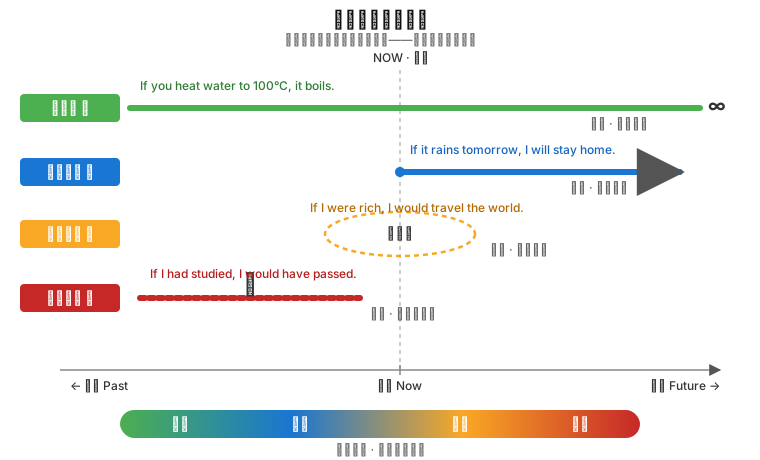
怎么记:四种条件句的本质是情绪的光谱——事实(零) → 期待(一) → 幻想(二) → 后悔(三)。先感受情绪,再选时态。
对比辨析:第一条件 vs 第二条件 ⚠️
| 第一条件(可能发生) | 第二条件(不太可能) |
|---|---|
| If I have enough money, I will buy a car. | If I had a million dollars, I would buy a house. |
| (我可能存够钱 → 真实计划) | (我没有一百万 → 做白日梦) |
| 情绪:期待、计划 | 情绪:幻想、遗憾 |
unless = if not
I won't go unless you come with me.
= I won't go if you don't come with me.
PET 阅读中 unless 比 if not 更常见。
😂 Grammar Joke
三种条件句讲一个故事
Zero Conditional(事实): “If you eat too much chocolate, you get fat.”
First Conditional(真实可能): “If I eat this whole cake, I will get fat.”
Second Conditional(白日梦): “If I were thin, I would still eat the cake.”
Third Conditional(后悔): “If I hadn’t eaten the cake, I wouldn’t have needed new trousers.”
从事实→可能→幻想→后悔,四种条件句讲完了一块蛋糕的完整人生故事。
语法点:零条件(永远的真理)→ 第一条件(可能发生)→ 第二条件(不太可能)→ 第三条件(已经没发生)。条件句的层级就是从”确定”到”遗憾”的情感光谱。
🏛 语言文化光点
“If I Were a Boy” — Beyonce 的语法课
Beyonce 2008年的歌 “If I Were a Boy” 是学第二条件句的完美教材:
“If I were a boy, I think I could understand How it feels to love a girl.”
注意她用的是 were(不是 was)——正式的虚拟语气。歌词里的每一句都是”不可能发生的假想”→ 标准的第二条件句。
另一个经典:John Lennon 的 “Imagine”:
“Imagine there’s no heaven… If there were no countries…”
用音乐记语法,比背规则有趣一百倍。
例题精讲
例1(📘 KET · 零条件)
If you _____ (mix) red and yellow, you _____ (get) orange.
答案:mix, get。科学事实 → 零条件 → 两边都用一般现在时。
例2(📘 KET · 第一条件 ⚠️ if 从句不用 will)
If it _____ (be) sunny tomorrow, we _____ (go) to the beach.
答案:is, will go。if 从句用一般现在,主句用 will。
例3(📘 KET · 选择题)
I’ll call you if I _____ any news. A. will have B. have C. am having
答案:B。if 从句 → 一般现在时,不用 will。
例4(📙 PET · 第二条件)
If I _____ (be) you, I _____ (study) harder for the exam.
答案:were, would study。给建议的经典句式 “If I were you…”。
例5(📙 PET · Writing 建议信)
Dear Tom, If I were you, I would talk to the teacher about this problem. If you explain the situation, I’m sure she will understand.
两种条件句混用——第二条件给建议(虚拟),第一条件描述真实可能性。PET 写作常见模式。
例6(📕 FCE · 第三条件 预览)
If Columbus hadn’t sailed west, he wouldn’t have discovered America.
对过去事实的假设——历史类话题。FCE/雅思写作用。
📖 Real English · 真实阅读
🔵 Survival Guide: What to Do If…
If you see a bear in the wild, don’t run. Running will make it chase you. If the bear doesn’t notice you, move away slowly and quietly. If it comes towards you, make yourself look big and make loud noises. If you are attacked by a grizzly bear, lie face down and play dead. But if it is a black bear, fight back — hit its nose. If you go hiking in bear country, always carry bear spray. It will save your life if you use it correctly.
🔵 What Would You Do with a Billion Dollars?
We asked five teenagers: “If you had a billion dollars, what would you do?”
Lily, 13: “I would build the biggest animal shelter in the world. If I could save every homeless dog, I would.”
Marcus, 14: “I would buy a football club. If I owned Manchester United, I would make sure they win every year.”
Noah, 12: “If I were a billionaire, I would still go to school. But I would arrive in a helicopter.”
Sofia, 15: “I would give half to charity. If everyone gave just a little, the world would be a much better place.”
Jin, 13: “If I had that much money, I wouldn’t tell anyone. I would just buy a really nice computer and keep playing Minecraft.”
🔵 History’s Biggest “What Ifs”
Historians love to ask: “What would have happened if…?”
- If the weather had been better on D-Day, would the invasion have started earlier?
- If the ancient Egyptians had invented the printing press, would their civilization have lasted longer?
- If Columbus hadn’t sailed west in 1492, who would have discovered America?
- If the internet hadn’t been invented, what would the world look like today?
These are called “counterfactuals” — imagining a different past. Nobody can answer them for certain, but thinking about them helps us understand why history happened the way it did.
📝 中文注释(先读完英文再展开)
野外生存指南:全文使用第一条件句(If you see…/If it comes…)——真实可能发生的将来情况。注意 if 从句全部用一般现在时,主句用 will/don’t(祈使句)。这是第一条件句在实用指南中的典型应用。
十亿美元怎么花:五个青少年的回答全用第二条件句(If I had/If I were/If I owned)——纯粹的假想,因为他们并没有十亿美元。would build/would buy/would give/would still go 表达不太可能实现的愿望。Jin 说 “I wouldn’t tell anyone” ——否定形式。
历史的”如果”:第三条件句(If…had been/hadn’t sailed/hadn’t been invented → would have…)——对过去已发生事实的假设。这些叫”反事实推理”(counterfactuals)。注意 would have + 过去分词的结构。这层 Aaron 现在只需要能读懂,不需要会写。
练习题
📘 KET 基础(5题)
- If water reaches 0°C, it _____ (freeze).
- If she _____ (not hurry), she will miss the bus.
- I _____ (lend) you my bike if you need it.
- If you _____ (press) this button, the machine starts.
- What will you do if it _____ (rain) on Sports Day?
📙 PET 进阶(3题)
- If I _____ (have) more free time, I _____ (learn) to play the guitar.(第二条件)
- 用 unless 改写:I won’t help you if you don’t ask politely.
- 写一封建议信(3句),混用第一条件和第二条件: “If I were you… If you try this, you will…”
🔗 节点关系
一般现在时 ─── 零条件(if + 现在, 现在)
    ↓
一般将来时 ─── 第一条件(if + 现在, will · 📘 KET)
    ↓
一般过去时 ─── 第二条件(if + 过去, would · 📙 PET)
    ↓
过去完成时 ─── 第三条件(if + had pp, would have pp · 📕 FCE)
双链跳转: 一般现在时 Simple Present | 一般将来时 Future Simple | 一般过去时 Simple Past | 情态动词 Modal Verbs
🔗 高频枢纽词 词枢纽 →
以下词汇属于 K12 词枢纽,在本节点高频出现——点击可查看同义辨析与 Aaron 易错点。